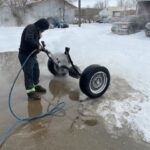
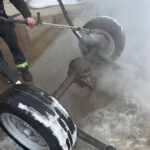
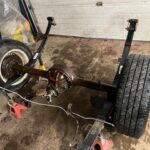
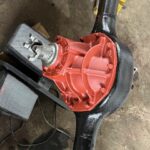
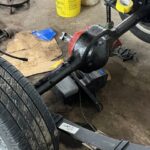
The entire rear end in the parts car was removed for cleaning and painting. The brakes on this rear end were recently done and the leaf springs were new including new shocks and lines. We dropped the whole unit down and placed on jack stands. First a wire wheel on a drill was used to take the crusty rust parts off the housing. Then the whole rear end was rolled over to the other shop where the heated pressure washer cleaned the grease and what not from the surface. It was returned to the original shop it was taken from to be placed on the jack stands again. A coat of rust stabilizer was applied. This product converts the rust to an inert material and can be painted when dry. Once dry I sprayed the black portion of the rear end and let it dry overnight. It is cool in that garage and I used a space heater to keep the temperature higher for increased drying. Then the red oxide primer was applied to the front section of the housing. Not sure why Ford did this but I carried on with the tradition in case a Ford Aficionado crawls under the car to inspect my work. Really I could have painted it black and no one would be the wiser but I always try to do the next car better and better……if that qualifies as better. Better for the primer company I guess! The final part was the flange which I painted a iron color. While I am writing we are trying to take the same assembly out of the project Cougar but seeing that it hasn’t been driven for over 40 years I doubt things will go smoothly. The parts car rear housing came out with no problem.
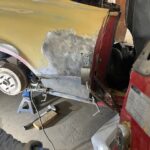
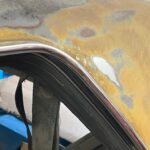
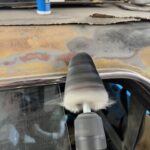
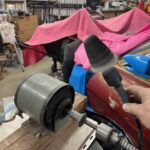
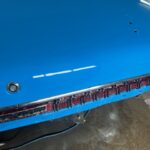
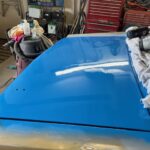
In my photo gallery I posted two photos of my trunk lid once I completed a paint blend where I burned through and where the clear was reacting to the material below. I then wet sanded again the entire lid and polished. I included photos of my remote polishing wand that I attach to an old furnace motor. It allows me to polish the roof rail stainless material without prying it off and polishing on the bench polishing wheel. It is easier to do the roof rails this way since they can be a real pain removing and reinstalling without damaging.